01 / Stroke rehab that reaches further
Reach.
Tap.
Recover.
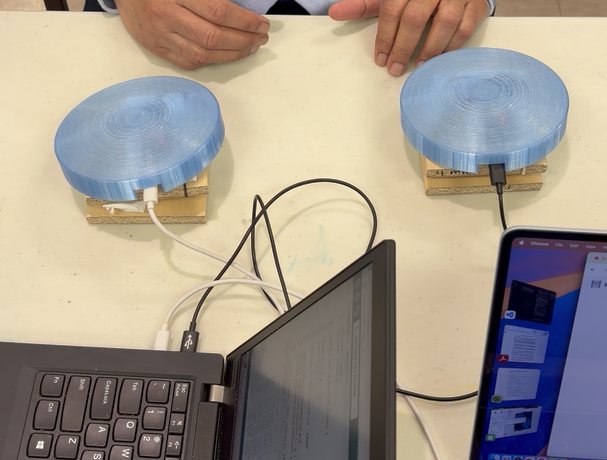
A modular grid of light-up tiles for stroke survivors working through one-sided neglect. Built with occupational therapists, physiatrists, and the people who use it.
The problem
Up to 30 percent of stroke survivors live with one-sided neglect.
The approach
Guided reaching draws attention back to the neglected side.
The result
Set up in five minutes. Sessions logged for the physician.
02 / Why we built this
One side
of the world
gets lost.
One in four stroke survivors experiences unilateral spatial neglect.
They do not see the food on the left side of the plate.
They do not feel the affected arm reach.
Recovery takes structured practice.
Tools today are expensive, fixed, and uncomfortable to use.
03 / What it does
A grid
of tiles.
One body.
Full focus.
Tiles light up one at a time.
The patient presses each one as it lights.
Every session is logged for the clinician.
Modular, portable, set up in five minutes.
04 / Where it goes
Clinic.
Hallway.
Home.
We priced it to reach people.
The target retail is $2,500 CAD.
The closest comparable device today is $20,000 and only lives in a clinic.
05 / Who validated it
Built
with the
people who
treat it.
Occupational therapists, physical therapists, and physiatrists from McMaster, The Ottawa Hospital, UBC, and Hong Kong Polytechnic shaped the design. The first prototypes are going to community stroke groups in Hamilton, Burlington, Oakville, and St. Catharines.
06 / How it compares
Different from what your clinic has.
| Tool | Motor + scanning | Immersion | Adaptability | Sensory tolerance | Setup time | Cost |
|---|---|---|---|---|---|---|
| Traditional rehab tools | Not integrated | Not immersive | Fixed | Friendly | Quick | Varies |
| VR-based tools | Visual heavy | Fully immersive headset | Software only | Overstimulates | Over 10 min | $5,000 and up |
| Dynavision board | Scanning, flat plane | Flat wall plane | Fixed wall unit | Bright and busy | Wall-mounted | About $20,000 |
| ReclaiMove | Balanced and customizable | Semi-immersive, real space | Modular | Adjustable | Under 5 min | Under $2,500 CAD |
One device that crosses the body, adjusts to the patient, and sets up in under five minutes.
07 / Common questions
Questions people ask us.
What is it?
A modular grid of light-up tiles. A stroke survivor presses the tiles as they light up, which trains attention and movement on the side they tend to ignore.
Who is it for?
Stroke survivors working through one-sided neglect, the clinicians who treat them, and caregivers who want structured practice at home.
What does it cost?
We are aiming for a retail price under $2,500 CAD. The closest comparable clinic device today costs around $20,000.
Can I get one now?
Not yet. We are running pilots in late 2026, in Canada first. Join the waitlist and we will reach out as units become available.
Can it be used at home?
Yes. It sets up in under five minutes and is built to be portable, so it works in the clinic and at home. Families can buy one to keep practicing between sessions.
Want to see it work?
We are visiting stroke support groups, aphasia programs, and rehab clinics across Ontario this summer. We would value your perspective. Reach out and we will write back within a few days.